Oregon State Penitentiary Replacement Concept

Share Oregon State Penitentiary Replacement Concept on Facebook Share Oregon State Penitentiary Replacement Concept on Twitter Share Oregon State Penitentiary Replacement Concept on Linkedin Email Oregon State Penitentiary Replacement Concept link

An Aging Population

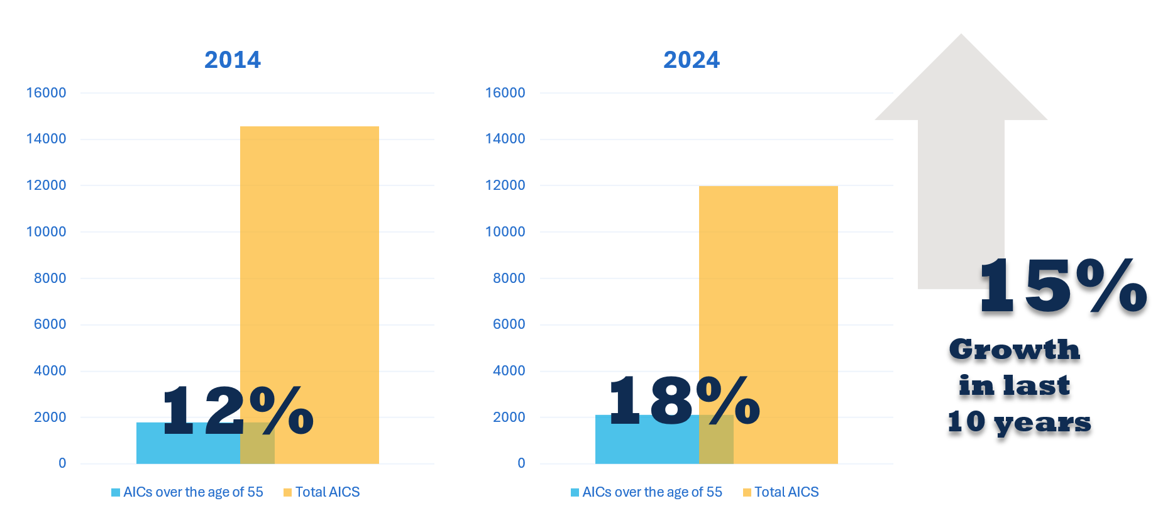
Over the past decade, the 55 plus population has grown by 15% and is expected to continue on that path. In addition to the challenges our aging population presents, the majority of our AIC’s have some sort of mental health treatment need, as Deputy Director Heidi Steward mentioned in an earlier presentation, and we do not have the appropriate programing space at OSP to properly accommodate this need.

Additionally, Oregon State Penitentiary is well beyond its useful life and doesn't support the level of care needed to support our incarcerated individuals. Estimated investments to come into ADA compliance, improve functionality, and maintenance of aging buildings at OSP exceeds $200,000,000 and will continue to grow exponentially. OSP's current deferred maintenance and seismic retrofit needs alone are nearing $111M, and to bring the HVAC needs to current standards is estimated to be just over $25M at 2026 costs estimations.

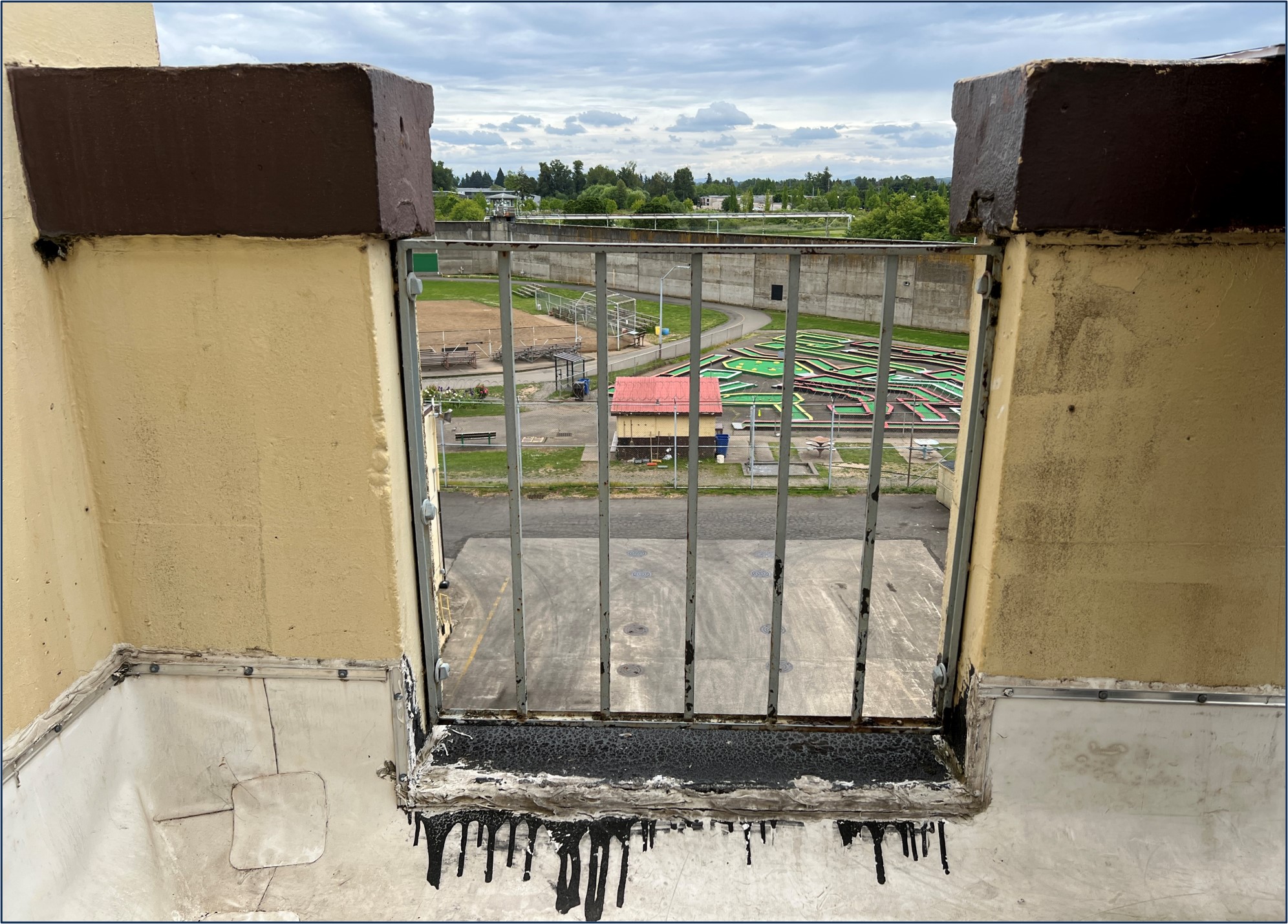
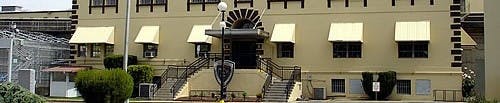
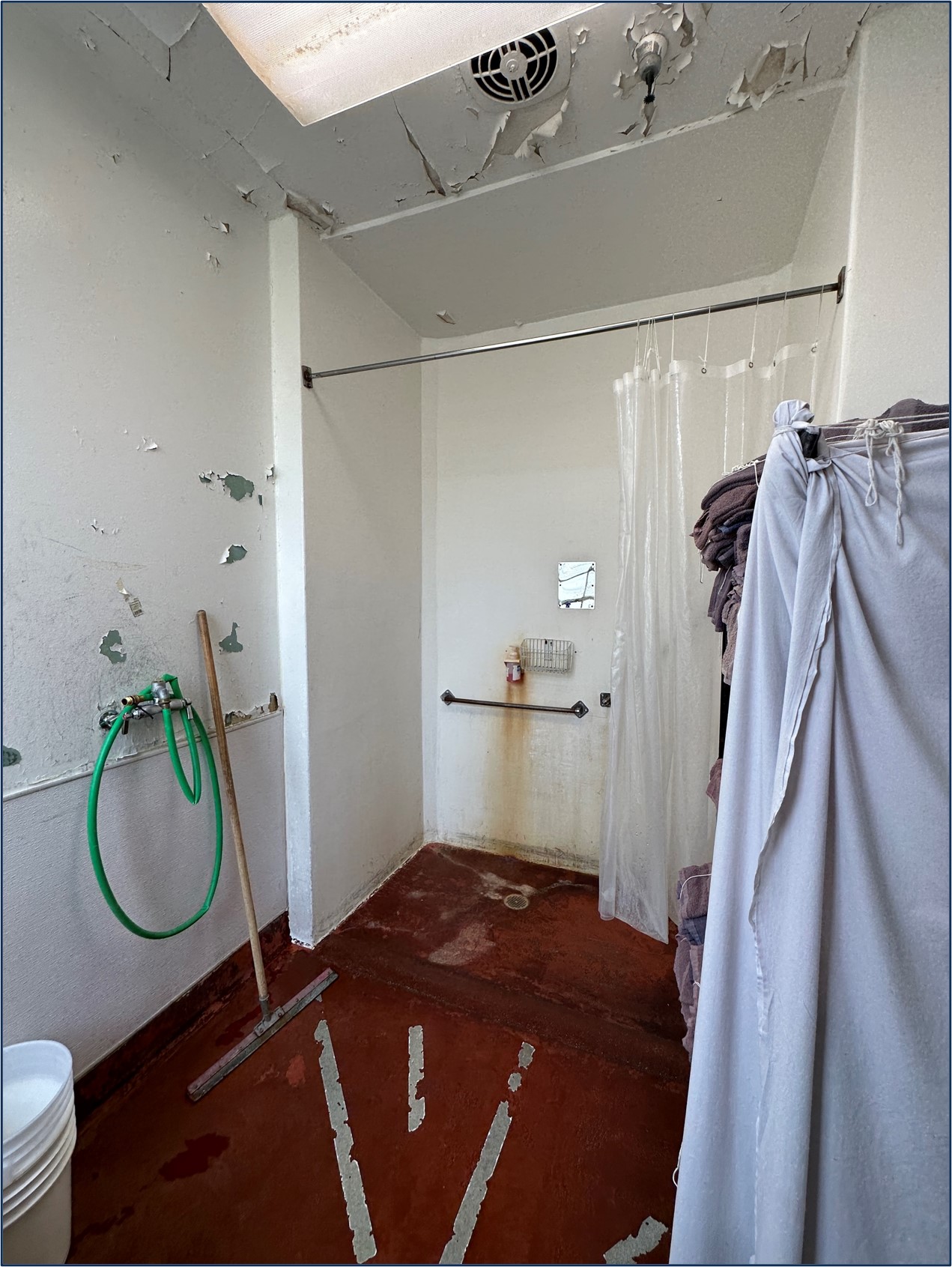
Below, you will find photo representations of just some of the challenges of operating in an institution that is nearing 100 years old with ever growing population needs and will highlight the need to replace OSP and construct a centralized healthcare facility here in the valley.
E-Block

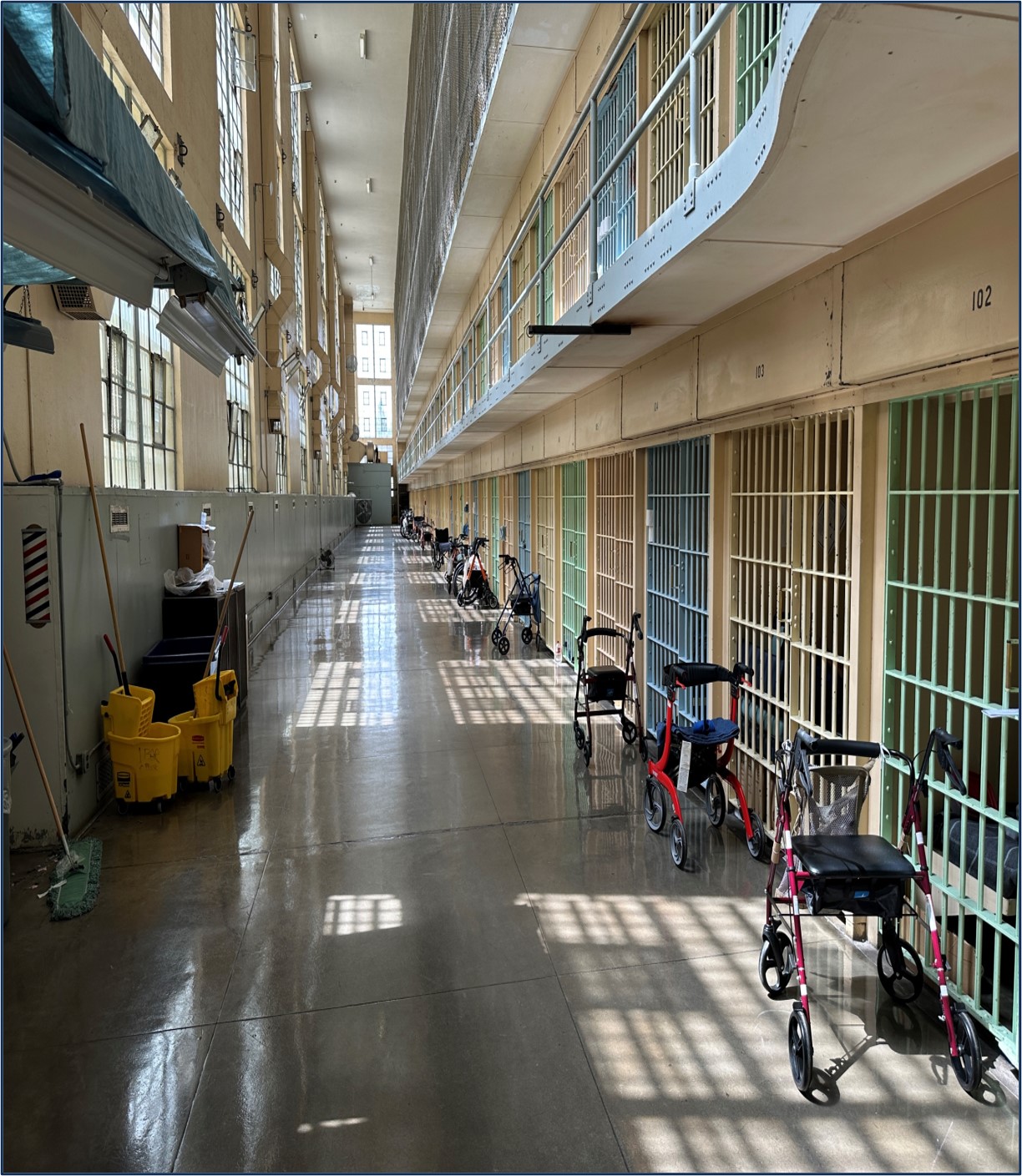
The E-Block at OSP currently houses the geriatric AICs, AICs that use walkers and wheelchairs on one side, and the opposite side is the Day Treatment Unit (DTU). The geriatric unit has multiple challenges, some of which include:

  • Inadequate openings for wheelchair and walker access
  • Poor lighting
  • Constant noise due to outdated equipment
  • In adequate HVAC creating heating and cooling issues, for instance, tier 4 and 5 have registered temperatures of 110 degrees with little access to ice or cooling, and in the winter months the floors freeze
  • Peeling Lead paint
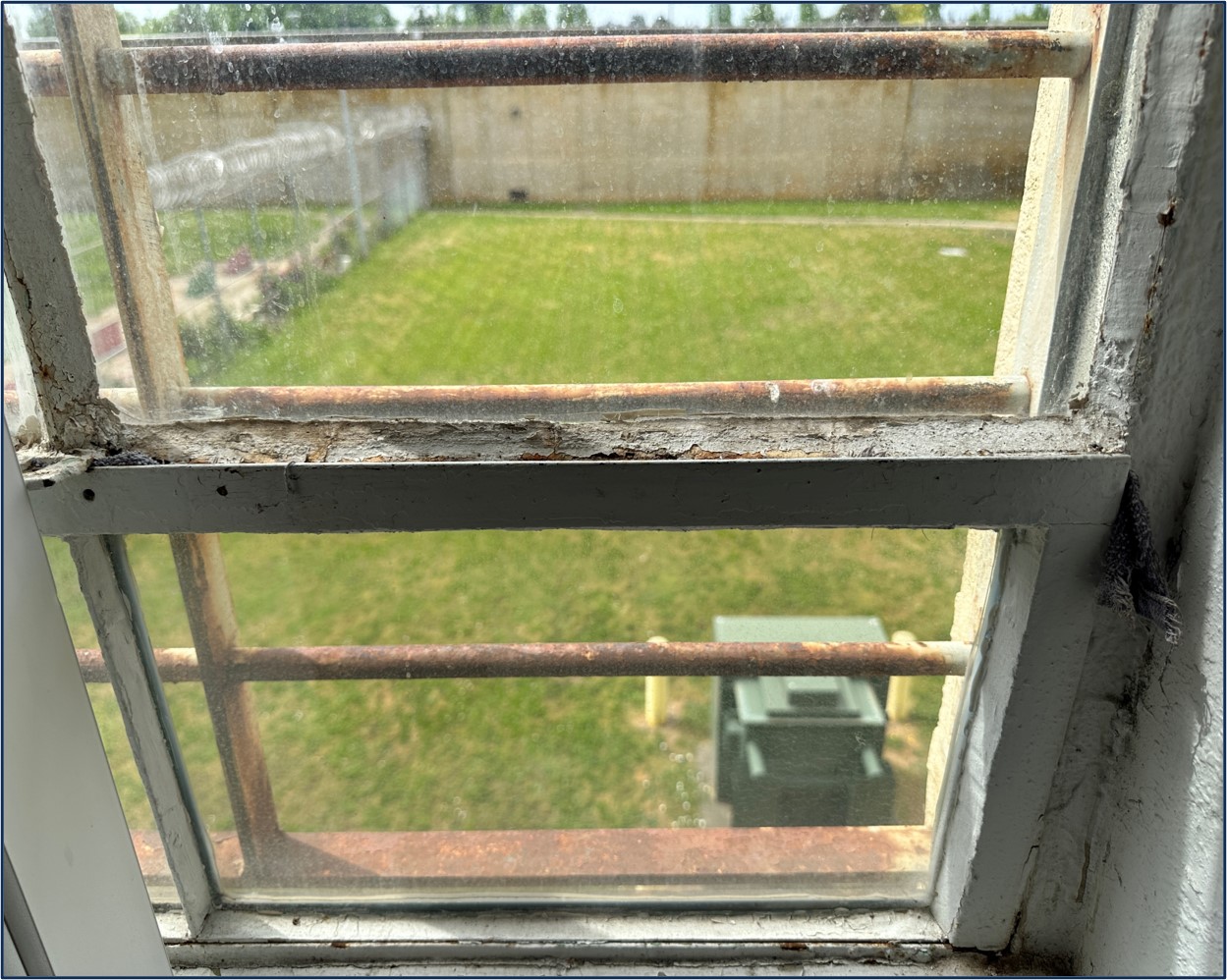
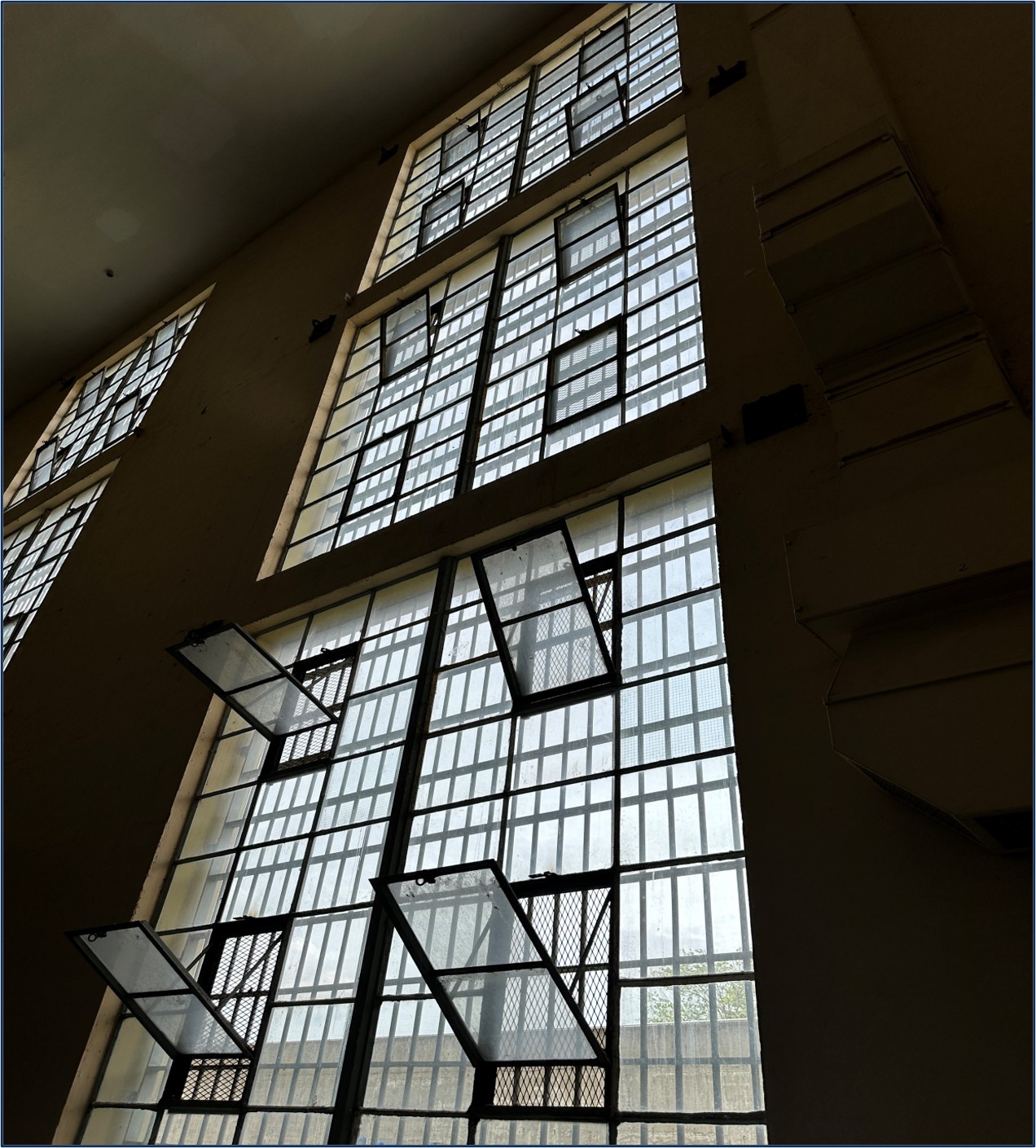
  • Outdated walls of single pane windows
  • No functional day room or seating on the unit so if treatment or counseling is required, staff’s only option is to sit outside of the AIC’s cell
Day Treatment Unit (DTU)

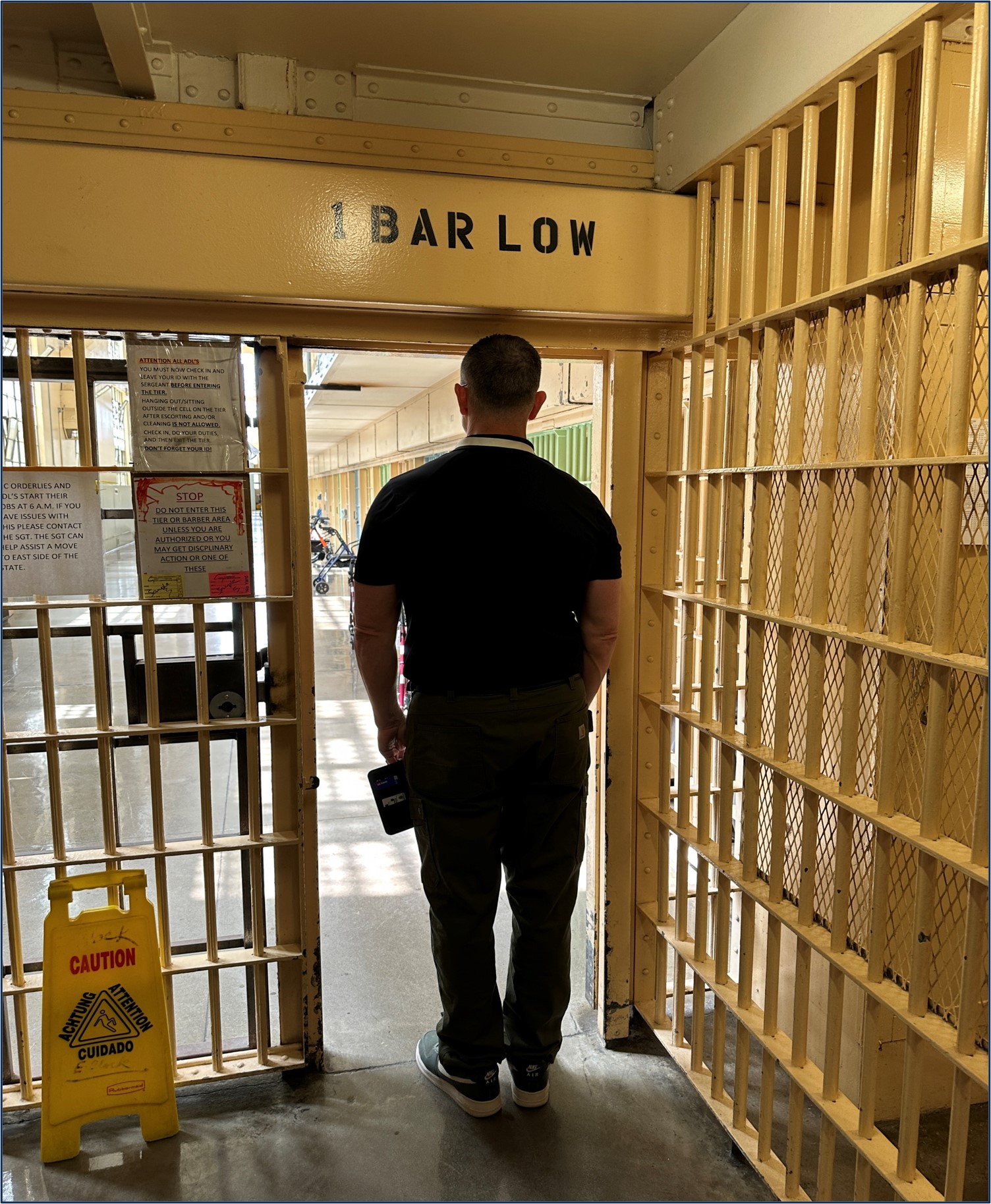
The Day Treatment Unit, located on the opposite side of the E block, houses AICs that are high maintenance.

40 high maintenance AICs reside on the bottom tier of cells. The four tiers above them house general population AICs. The AICs in DTU are considered highly vulnerable and have issues with the AICs housed above them.

Some Issues on the DTU include:

  • No privacy for treatment. This allows the general population to hear staff and AIC discussions which creates additional PREA and extortion situations.
  • This area also lacks a fire suppression system
  • Lack of proper ventilation
  • No functional day room, which again, means staff must sit outside of the AIC’s cell
Critical Resources and Services

Critical resources, such as Counselors, ADA coordinators, Chapel, Law library, the barber shop and more, are Located on the second, third, and fourth floor of the main institution. AICs with disabilities have a very hard time or just simply cannot access these resources.

For instance:

The second floor of the institution has the Correctional Rehabilitation manager and counselors, release counselors, grievance, discrimination, and ADA coordinators.

On the third floor are critical resources, nearly impossible to access, they include the Intermediate Care Housing (ICH) Lounge, Legal Library, PREA officer, UA officer, IWP Coordinator, some BHS staff, and the barber shop.

The fourth floor has the Law Library, Chapel and Education programs.

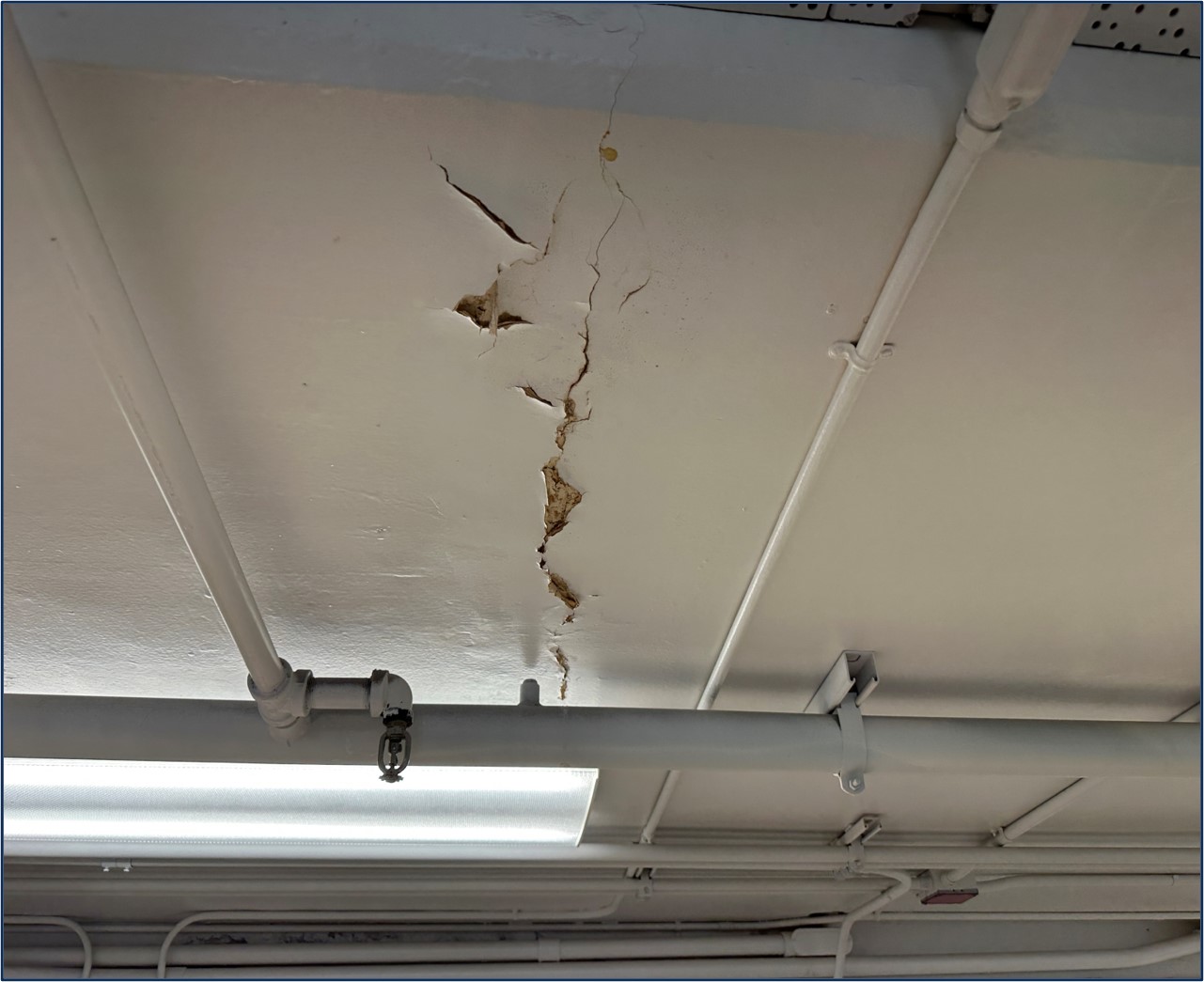
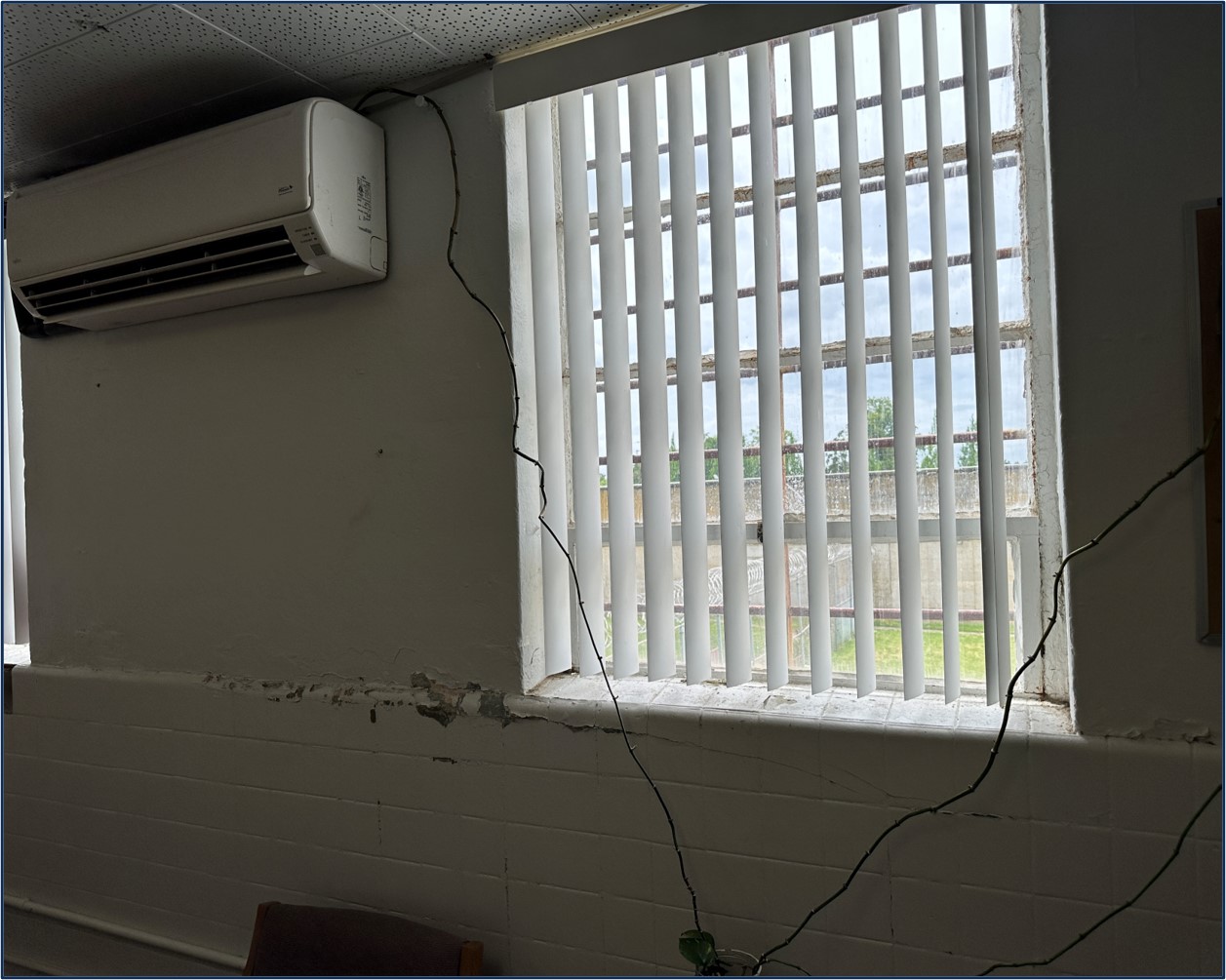
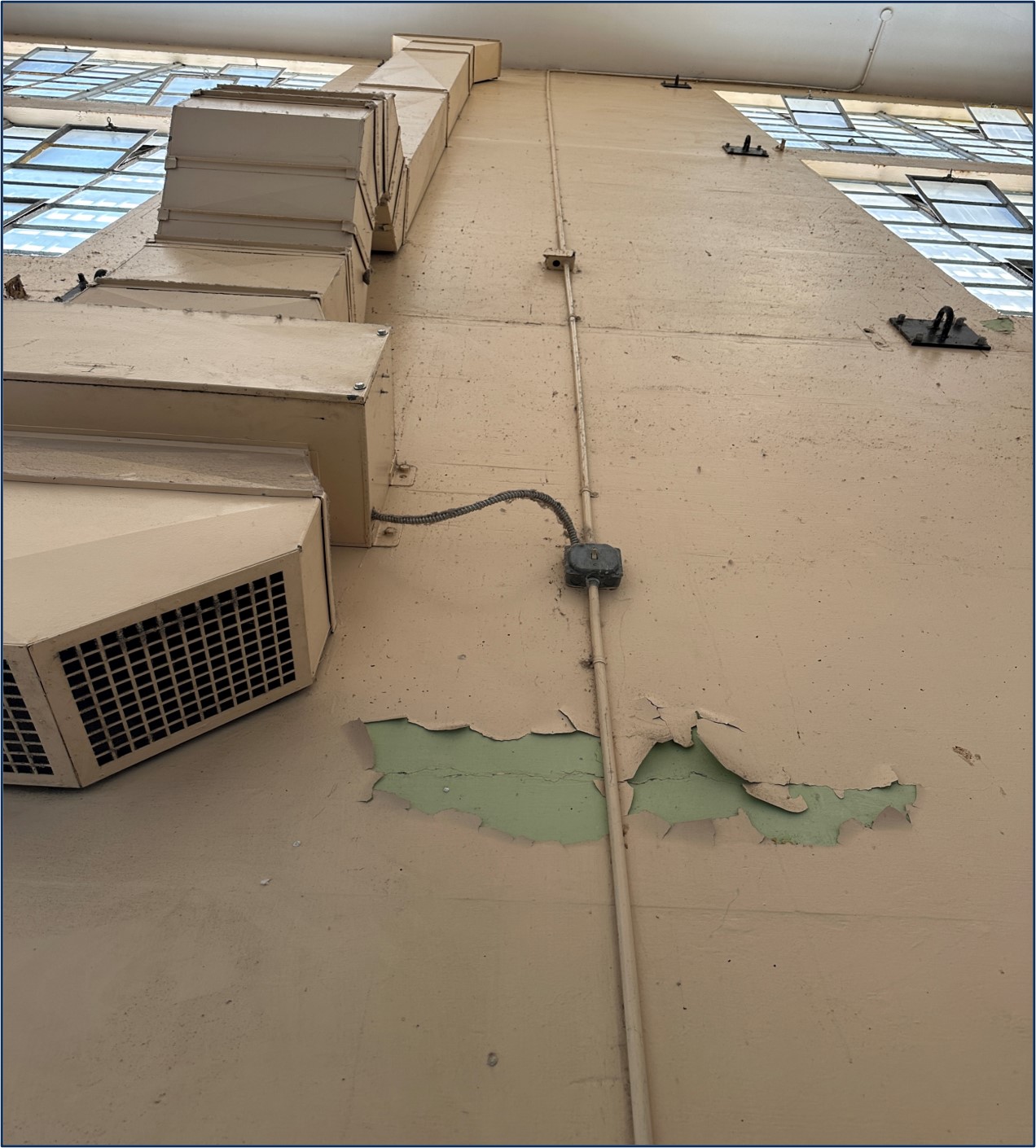
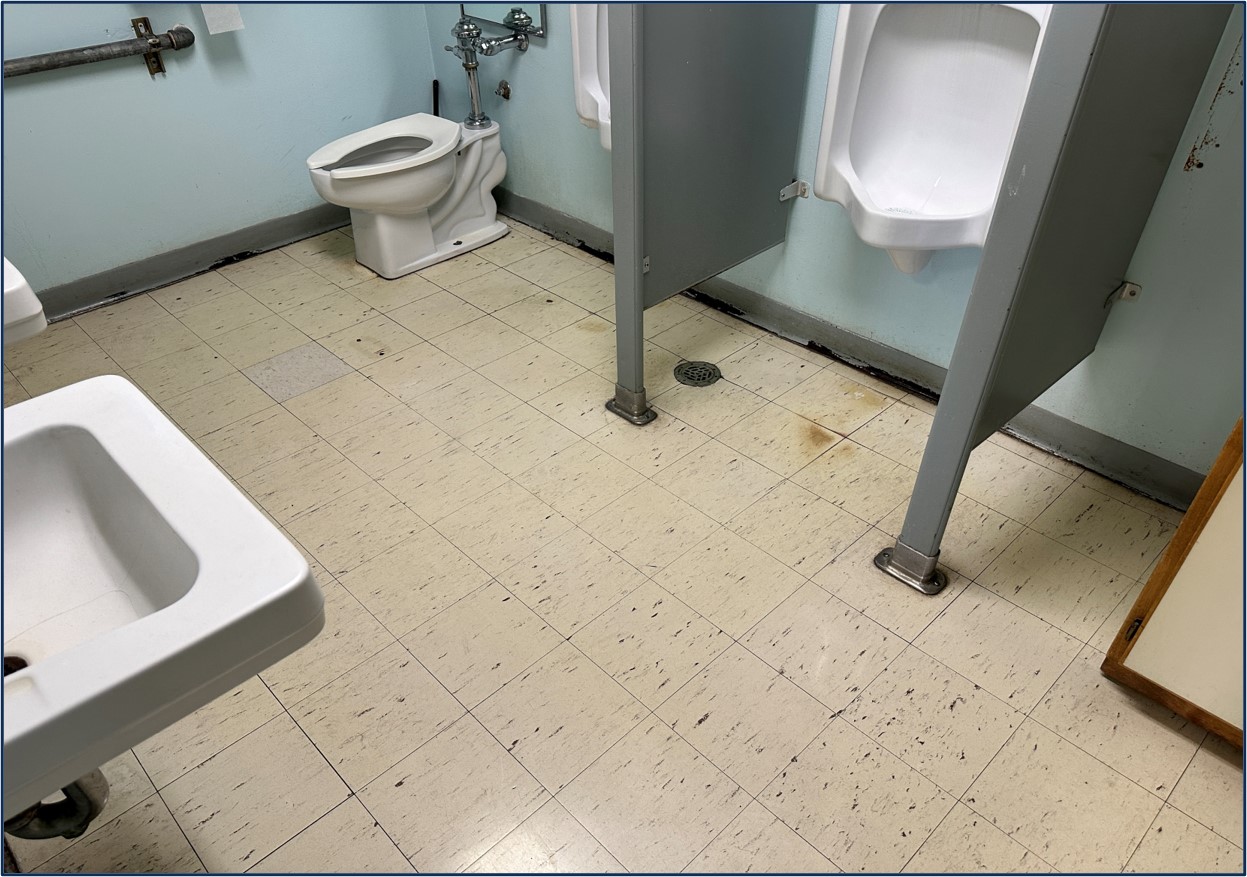
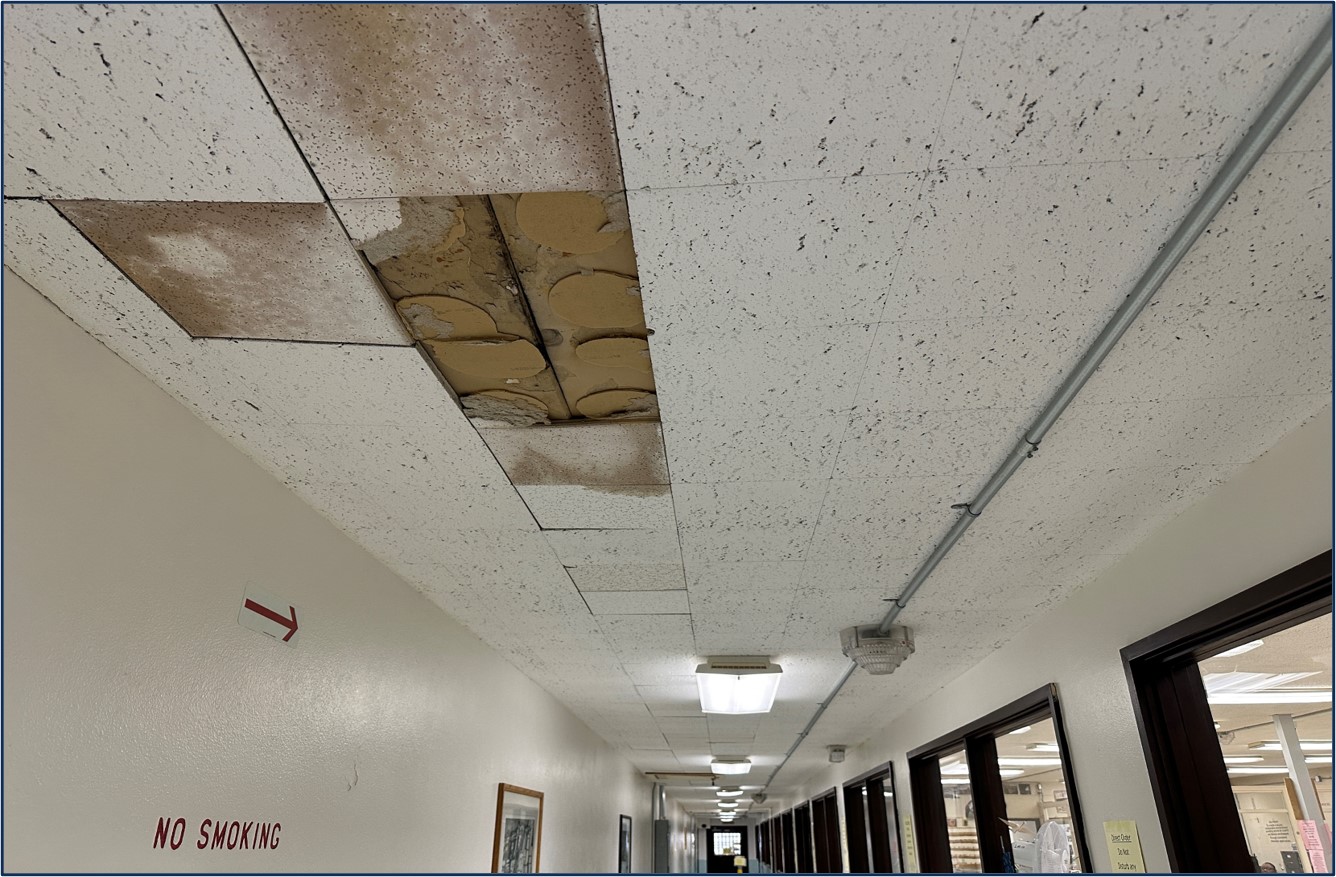
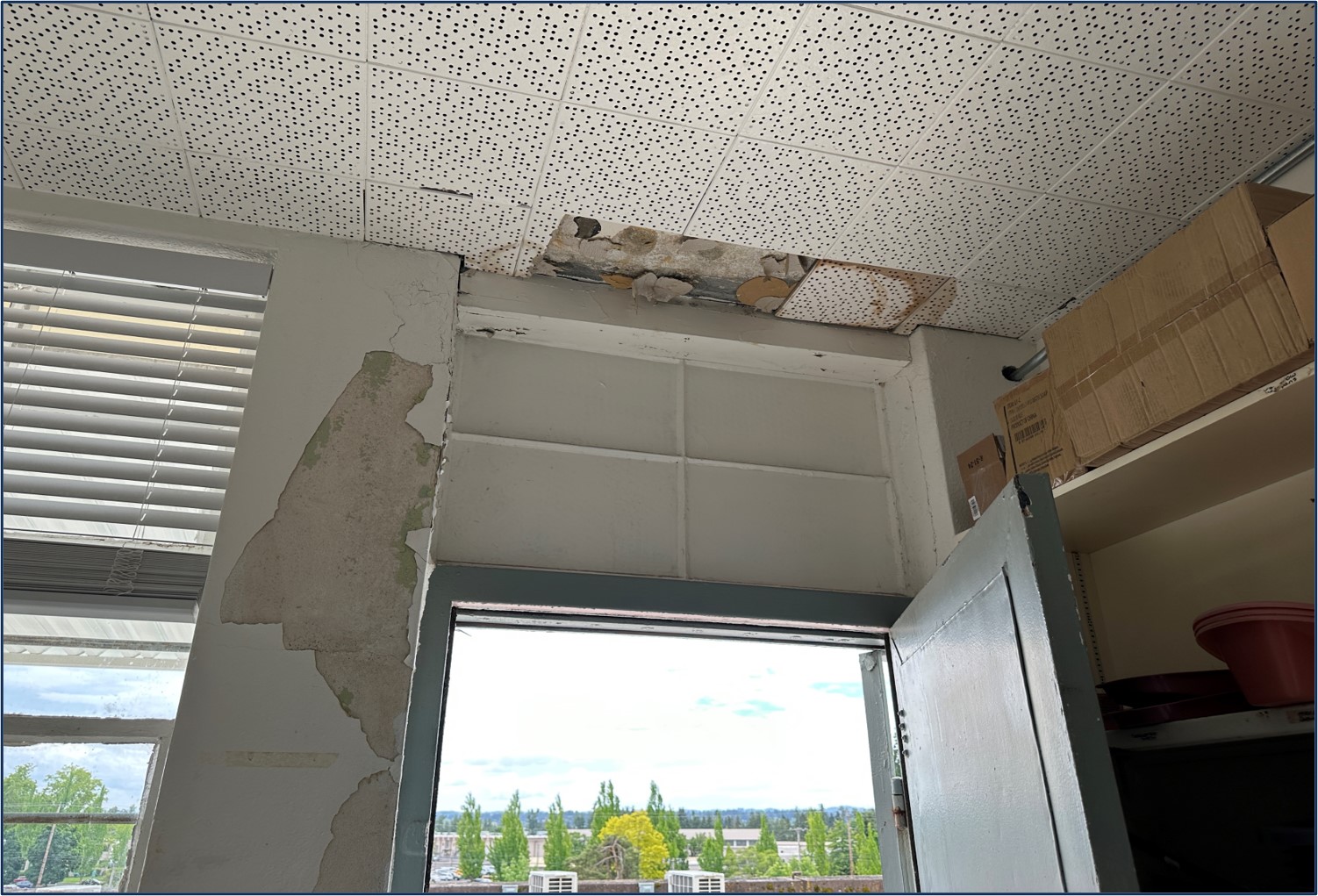
As you can see from the photos, there are a number of areas where water infiltration had damaged the structure and ceiling along with needed ADA upgrades, but more importantly, the lack of access to these areas impede the ability of several to utilize these services.. In addition, there are several other concerns like:

  • No elevator access to these critical areas, makes accessing these services difficult for some individuals
  • Limits the ability of Staff with accessibility issues to work in these areas
  • Staff responding to critical incidents must run stairs to provide aid and support
  • Difficulty accessing legal phones
  • Average temperature in the summer is 106 degrees
  • Asbestoses in the floors, walls, and ceilings
  • Lose wires
  • Peeling paint -- as that may not seem like a big issue and one that should be easy to remedy, we have to keep in mind that most all of the paint in this facility, due to its age, is lead based and that would have to be mitigated appropriately before repairs can be completed. Both timely and costly.
  • Single pane inefficient windows with broken window glazing
  • One wall mounted air conditioner to serve six offices
  • Evidence of prior water intrusion with cracks, decaying ceiling panels, most likely containing asbestos due to age.

The OSP Infirmary

The infirmary at OSP is severely outdated, undersized for the demand, and needs significant repair and updating. The facility's infrastructure suffers from numerous issues, including leaky roofs, and inadequate heating and cooling systems, that hamper the provision of effective healthcare. The cramped and deteriorating space is insufficient to meet the needs of the growing geriatric AIC population, resulting in overcrowded conditions that further strain the already limited resources. These conditions not only compromise the quality of care provided but also pose serious health risks to both AICs and medical staff, highlighting an urgent need for the requested health care facility. It is also worth noting that the infirmary is located on the third floor with a single elevator as the primary source of egress.

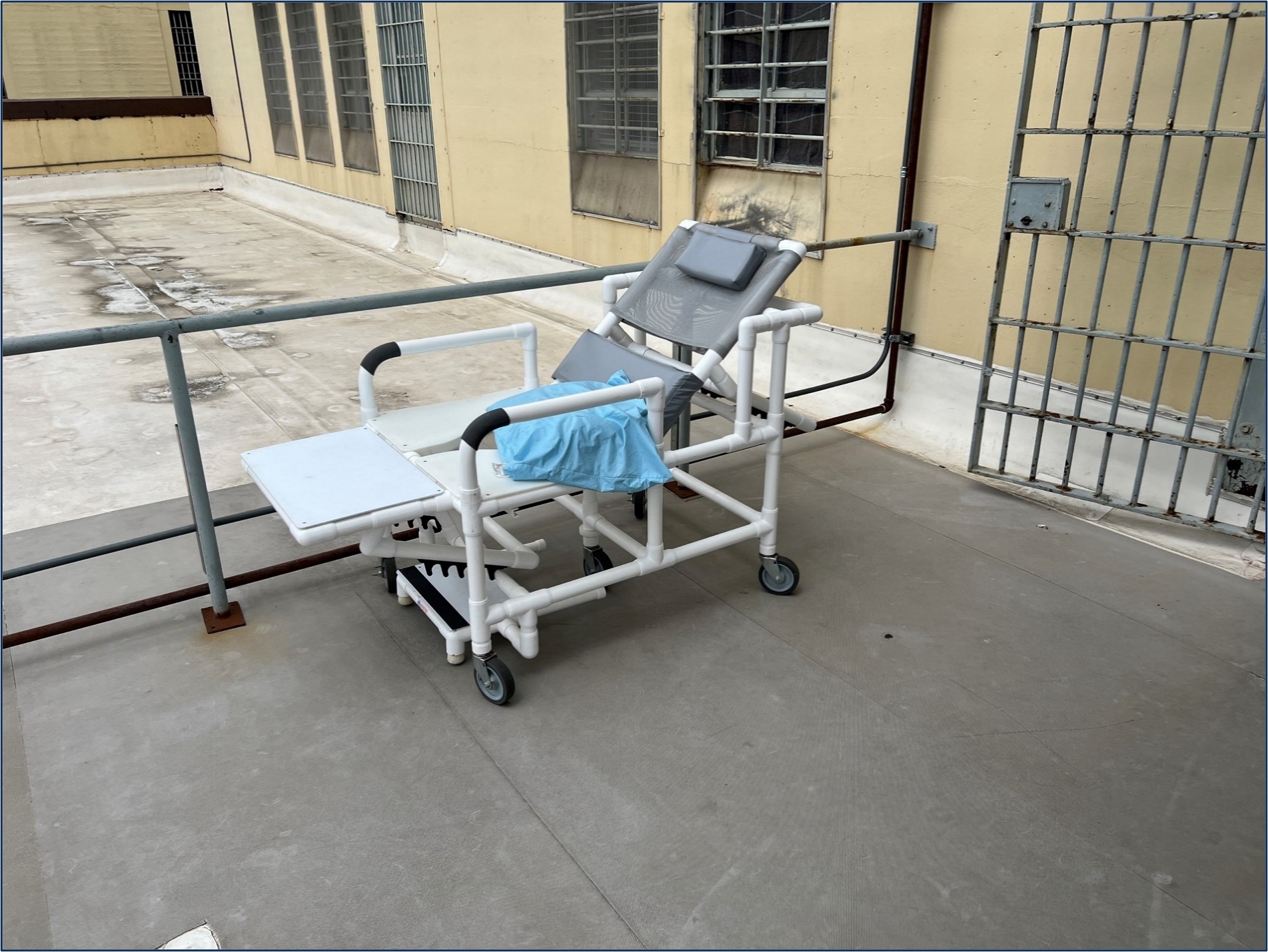
For adults in custody on hospice or those enduring long-term stays in the infirmary, that would like to go outside or simply enjoy some fresh air, as you can see in these pictures, the outdoor area is a harsh and uninviting space provided by utilizing a piece of roof top outside of the infirmary.

Creating a centralized Health Care Facility is one step in providing effective and efficient specialist care to AICs. Developing a campus that allows us to serve acute populations serving medical, mental health, and geriatric AICs as well as housing a centralized pharmacy would be the most effective use of resources. Housing the growing Transport Unit within the same campus would provide additional cost saving measures while allowing for the transport of AICs to this centralized Health Care Facility and potentially reducing the number of out of facility medical trips. As important as Health care facility, the replacement of OSP should be prioritized due to the rapid growth of deferred Maintenance of the current institution, significant maintenance and upkeep costs, and high investment for improvements exceeding fiscal responsibility.

Option: A Facility Designed for Healthcare

Like senior citizens outside prison walls, older individuals in prison are more likely to experience dementia, impaired mobility, and loss of hearing and vision. In prisons, these ailments present special challenges and can necessitate increased staffing levels and enhanced officer training to accommodate those who have difficulty complying with orders from correctional officers. They can also require structural accessibility adaptations, such as special housing and wheelchair ramps. Additionally, older inmates are more susceptible to costly chronic medical conditions. They typically experience the effects of age sooner than people outside prison because of issues such as substance use disorder, inadequate preventive and primary care before incarceration, and stress linked to the isolation and sometimes violent environment of prison life

  • Expansion of medical care services for more access to care
  • Expansion of handicapped-accessible bathrooms, lower bunks, etc.
  • On-site pharmacy

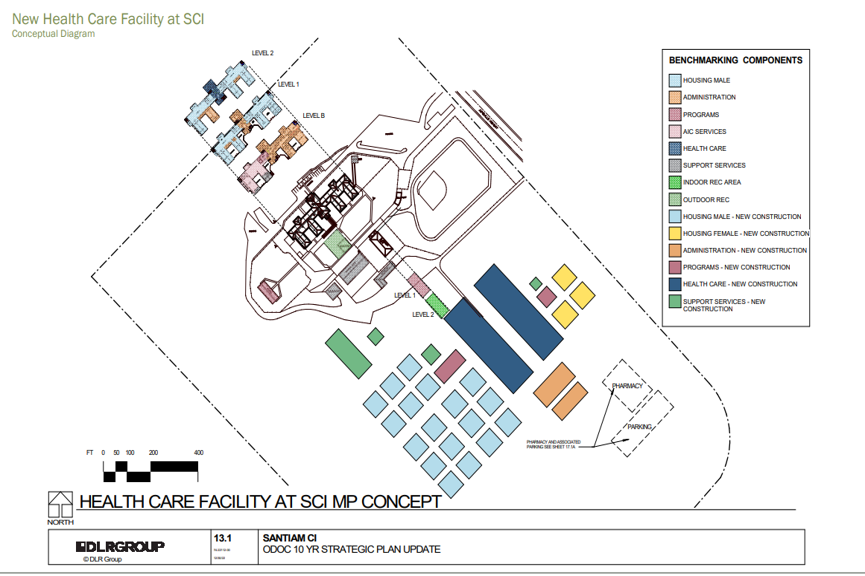
The 25/27 Governors Revised Budget allots $4.5 million in general funds to conduct a feasibility study and conceptual design for a new Centralized Health Care Facility for medical, mental health, and geriatric AIC care along with the feasibility study and conceptual design work for the replacement of OSP. The Final design, engineering work and construction of these projects will be requested over several biennia.

We believe we have ample currently DOC owned property here in Salem for these projects and additional property in Junction city already cited for a prison. A feasibility study on these properties will define the best fit. Our departure from the OSP property that is prime real estate within the city limits could very well lend itself to other housing or commercial opportunities for the city.

As we progress through this process, we will update the information on this page and send out newsletters to subscribers (subscribe in the top right-hand corner).

An Aging Population

Over the past decade, the 55 plus population has grown by 15% and is expected to continue on that path. In addition to the challenges our aging population presents, the majority of our AIC’s have some sort of mental health treatment need, as Deputy Director Heidi Steward mentioned in an earlier presentation, and we do not have the appropriate programing space at OSP to properly accommodate this need.

Additionally, Oregon State Penitentiary is well beyond its useful life and doesn't support the level of care needed to support our incarcerated individuals. Estimated investments to come into ADA compliance, improve functionality, and maintenance of aging buildings at OSP exceeds $200,000,000 and will continue to grow exponentially. OSP's current deferred maintenance and seismic retrofit needs alone are nearing $111M, and to bring the HVAC needs to current standards is estimated to be just over $25M at 2026 costs estimations.

Below, you will find photo representations of just some of the challenges of operating in an institution that is nearing 100 years old with ever growing population needs and will highlight the need to replace OSP and construct a centralized healthcare facility here in the valley.

E-Block

The E-Block at OSP currently houses the geriatric AICs, AICs that use walkers and wheelchairs on one side, and the opposite side is the Day Treatment Unit (DTU). The geriatric unit has multiple challenges, some of which include:

  • Inadequate openings for wheelchair and walker access
  • Poor lighting
  • Constant noise due to outdated equipment
  • In adequate HVAC creating heating and cooling issues, for instance, tier 4 and 5 have registered temperatures of 110 degrees with little access to ice or cooling, and in the winter months the floors freeze
  • Peeling Lead paint
  • Outdated walls of single pane windows
  • No functional day room or seating on the unit so if treatment or counseling is required, staff’s only option is to sit outside of the AIC’s cell

Day Treatment Unit (DTU)

The Day Treatment Unit, located on the opposite side of the E block, houses AICs that are high maintenance.

40 high maintenance AICs reside on the bottom tier of cells. The four tiers above them house general population AICs. The AICs in DTU are considered highly vulnerable and have issues with the AICs housed above them.

Some Issues on the DTU include:

  • No privacy for treatment. This allows the general population to hear staff and AIC discussions which creates additional PREA and extortion situations.
  • This area also lacks a fire suppression system
  • Lack of proper ventilation
  • No functional day room, which again, means staff must sit outside of the AIC’s cell
Critical Resources and Services

Critical resources, such as Counselors, ADA coordinators, Chapel, Law library, the barber shop and more, are Located on the second, third, and fourth floor of the main institution. AICs with disabilities have a very hard time or just simply cannot access these resources.

For instance:

The second floor of the institution has the Correctional Rehabilitation manager and counselors, release counselors, grievance, discrimination, and ADA coordinators.

On the third floor are critical resources, nearly impossible to access, they include the Intermediate Care Housing (ICH) Lounge, Legal Library, PREA officer, UA officer, IWP Coordinator, some BHS staff, and the barber shop.

The fourth floor has the Law Library, Chapel and Education programs.

As you can see from the photos, there are a number of areas where water infiltration had damaged the structure and ceiling along with needed ADA upgrades, but more importantly, the lack of access to these areas impede the ability of several to utilize these services.. In addition, there are several other concerns like:

  • No elevator access to these critical areas, makes accessing these services difficult for some individuals
  • Limits the ability of Staff with accessibility issues to work in these areas
  • Staff responding to critical incidents must run stairs to provide aid and support
  • Difficulty accessing legal phones
  • Average temperature in the summer is 106 degrees
  • Asbestoses in the floors, walls, and ceilings
  • Lose wires
  • Peeling paint -- as that may not seem like a big issue and one that should be easy to remedy, we have to keep in mind that most all of the paint in this facility, due to its age, is lead based and that would have to be mitigated appropriately before repairs can be completed. Both timely and costly.
  • Single pane inefficient windows with broken window glazing
  • One wall mounted air conditioner to serve six offices
  • Evidence of prior water intrusion with cracks, decaying ceiling panels, most likely containing asbestos due to age.
The OSP Infirmary

The infirmary at OSP is severely outdated, undersized for the demand, and needs significant repair and updating. The facility's infrastructure suffers from numerous issues, including leaky roofs, and inadequate heating and cooling systems, that hamper the provision of effective healthcare. The cramped and deteriorating space is insufficient to meet the needs of the growing geriatric AIC population, resulting in overcrowded conditions that further strain the already limited resources. These conditions not only compromise the quality of care provided but also pose serious health risks to both AICs and medical staff, highlighting an urgent need for the requested health care facility. It is also worth noting that the infirmary is located on the third floor with a single elevator as the primary source of egress.

For adults in custody on hospice or those enduring long-term stays in the infirmary, that would like to go outside or simply enjoy some fresh air, as you can see in these pictures, the outdoor area is a harsh and uninviting space provided by utilizing a piece of roof top outside of the infirmary.

Creating a centralized Health Care Facility is one step in providing effective and efficient specialist care to AICs. Developing a campus that allows us to serve acute populations serving medical, mental health, and geriatric AICs as well as housing a centralized pharmacy would be the most effective use of resources. Housing the growing Transport Unit within the same campus would provide additional cost saving measures while allowing for the transport of AICs to this centralized Health Care Facility and potentially reducing the number of out of facility medical trips. As important as Health care facility, the replacement of OSP should be prioritized due to the rapid growth of deferred Maintenance of the current institution, significant maintenance and upkeep costs, and high investment for improvements exceeding fiscal responsibility.
Option: A Facility Designed for Healthcare

Like senior citizens outside prison walls, older individuals in prison are more likely to experience dementia, impaired mobility, and loss of hearing and vision. In prisons, these ailments present special challenges and can necessitate increased staffing levels and enhanced officer training to accommodate those who have difficulty complying with orders from correctional officers. They can also require structural accessibility adaptations, such as special housing and wheelchair ramps. Additionally, older inmates are more susceptible to costly chronic medical conditions. They typically experience the effects of age sooner than people outside prison because of issues such as substance use disorder, inadequate preventive and primary care before incarceration, and stress linked to the isolation and sometimes violent environment of prison life

  • Expansion of medical care services for more access to care
  • Expansion of handicapped-accessible bathrooms, lower bunks, etc.
  • On-site pharmacy

The 25/27 Governors Revised Budget allots $4.5 million in general funds to conduct a feasibility study and conceptual design for a new Centralized Health Care Facility for medical, mental health, and geriatric AIC care along with the feasibility study and conceptual design work for the replacement of OSP. The Final design, engineering work and construction of these projects will be requested over several biennia.

We believe we have ample currently DOC owned property here in Salem for these projects and additional property in Junction city already cited for a prison. A feasibility study on these properties will define the best fit. Our departure from the OSP property that is prime real estate within the city limits could very well lend itself to other housing or commercial opportunities for the city.
As we progress through this process, we will update the information on this page and send out newsletters to subscribers (subscribe in the top right-hand corner).

Have a Question?

Email
loader image
Didn't receive confirmation?
Seems like you are already registered, please provide the password. Forgot your password? Create a new one now.
  • Share Are you able to evaluate the conditions of the current AIC's and see if they can be sent to a different facility for care that can meet their needs? I understand that money will always be an issue. But has the idea of a facility with it's sole purpose is AIC treatment. You can have an area for those who require wheel chair aceess, provide bathroom stalls/showers that can fit their needs. In another area you can have the AIC's that are on hospice. You can look at it as a sort of hospital for AIC's. There are some medical equipment in other facilities that are either being under utilized or not used at all. All that equipment can be moved to this one facility. you can also regulate the level of security the AIC would need to be under. on Facebook Share Are you able to evaluate the conditions of the current AIC's and see if they can be sent to a different facility for care that can meet their needs? I understand that money will always be an issue. But has the idea of a facility with it's sole purpose is AIC treatment. You can have an area for those who require wheel chair aceess, provide bathroom stalls/showers that can fit their needs. In another area you can have the AIC's that are on hospice. You can look at it as a sort of hospital for AIC's. There are some medical equipment in other facilities that are either being under utilized or not used at all. All that equipment can be moved to this one facility. you can also regulate the level of security the AIC would need to be under. on Twitter Share Are you able to evaluate the conditions of the current AIC's and see if they can be sent to a different facility for care that can meet their needs? I understand that money will always be an issue. But has the idea of a facility with it's sole purpose is AIC treatment. You can have an area for those who require wheel chair aceess, provide bathroom stalls/showers that can fit their needs. In another area you can have the AIC's that are on hospice. You can look at it as a sort of hospital for AIC's. There are some medical equipment in other facilities that are either being under utilized or not used at all. All that equipment can be moved to this one facility. you can also regulate the level of security the AIC would need to be under. on Linkedin Email Are you able to evaluate the conditions of the current AIC's and see if they can be sent to a different facility for care that can meet their needs? I understand that money will always be an issue. But has the idea of a facility with it's sole purpose is AIC treatment. You can have an area for those who require wheel chair aceess, provide bathroom stalls/showers that can fit their needs. In another area you can have the AIC's that are on hospice. You can look at it as a sort of hospital for AIC's. There are some medical equipment in other facilities that are either being under utilized or not used at all. All that equipment can be moved to this one facility. you can also regulate the level of security the AIC would need to be under. link

    Are you able to evaluate the conditions of the current AIC's and see if they can be sent to a different facility for care that can meet their needs? I understand that money will always be an issue. But has the idea of a facility with it's sole purpose is AIC treatment. You can have an area for those who require wheel chair aceess, provide bathroom stalls/showers that can fit their needs. In another area you can have the AIC's that are on hospice. You can look at it as a sort of hospital for AIC's. There are some medical equipment in other facilities that are either being under utilized or not used at all. All that equipment can be moved to this one facility. you can also regulate the level of security the AIC would need to be under.

    l.najerasanchez asked 3 months ago

    Let me break your question down a little bit:

    • Are you able to evaluate the conditions of the current AIC's and see if they can be sent to a different facility for care that can meet their needs?
      • Yes, we are continually evaluating AIC health needs and transporting them as necessary.
    • Has the idea of a facility with it's sole purpose is AIC treatment? You can have an area for those who require wheel chair aceess, provide bathroom stalls/showers that can fit their needs. In another area you can have the AIC's that are on hospice. You can look at it as a sort of hospital for AIC's. 
      • Yes, that is exactly what this process is evaluating. Currently, DOC does not have the capacity to "move around" enough AICs to meet everybody's needs -- there simply aren't enough beds. Creating a consolidated medical facility is one of the end goals with this project.
    • All that equipment can be moved to this one facility.  You can also regulate the level of security the AIC would need to be under.  
      • We still need medical equipment at other facilities, as even during the course of a healthy person's life, they will likely need medical treatment.  There is currently no suitable facility that would meet the wide spectrum of needs that our AIC population has, even if we could get all of the necessary equipment to one existing location.  The thought process is that if we have to replace OSP anyway (and we do!), we might as well build the replacement with all of these considerations in mind.


    Thank you for the questions!


  • Share How much money will go to "research" and exactly why would it take 2 full years to research any of this? And then an additional year for planning? I would think this would be researched and planned out ahead of time so DOC would know how much money was actually needed. on Facebook Share How much money will go to "research" and exactly why would it take 2 full years to research any of this? And then an additional year for planning? I would think this would be researched and planned out ahead of time so DOC would know how much money was actually needed. on Twitter Share How much money will go to "research" and exactly why would it take 2 full years to research any of this? And then an additional year for planning? I would think this would be researched and planned out ahead of time so DOC would know how much money was actually needed. on Linkedin Email How much money will go to "research" and exactly why would it take 2 full years to research any of this? And then an additional year for planning? I would think this would be researched and planned out ahead of time so DOC would know how much money was actually needed. link

    How much money will go to "research" and exactly why would it take 2 full years to research any of this? And then an additional year for planning? I would think this would be researched and planned out ahead of time so DOC would know how much money was actually needed.

    Beej asked 2 months ago

    To put the project in perspective: OSP currently supports approximately 600 staff and close to 2,200 adults in custody (AICs), for a total daily population of roughly 2,800 people that live and work there. There are 241 incorporated towns in Oregon -- OSP has a larger population than 145 of them. That means OSP alone has a higher population than 60% of Oregon's towns. Roughly speaking, every day at OSP we support a population and provide services equivalent to Burns, Oregon.

    Now consider what it would take to decommission the entire town of Burns, select a new site for it, and design it to meet modern  medical needs needs. You'd need to plan for everything necessary to support that population: housing, utilities, safety systems, healthcare facilities, food services, and infrastructure. At OSP, we also have specialized industries including a furniture factory, metal shop, contact center, and industrial laundry facilities, all of which must be replicated or replaced. We have functioning college programs and work-based education that serve rehabilitation goals and require careful evaluation and planning as to how they would function at a new location that may (or may not) be further away from the existing resource pool.

    The research phase isn't simply about gathering generic information; it involves site selection studies, environmental assessments, geotechnical surveys, infrastructure capacity analyses, security requirements specific to correctional facilities, and cost modeling. The planning phase then takes those findings and develops detailed architectural and operational plans that meet modern correctional standards, ADA requirements, seismic codes, and therapeutic environment principles.

    If you can imagine what it would take to plan moving Burns: evaluating sites, designing a new town, planning for utilities, industries, services, and the unique needs of that community, you can imagine what it will take to plan moving OSP. This is why comprehensive research and planning timelines are necessary: we're essentially relocating and rebuilding a small town with highly specialized requirements.

  • Share What will happen to the staff that work at OSP if the site is shut down and re-constructed? What will happen to the staff if a new prison is built will it still be under AOCE or will it be opened under AFSCME? on Facebook Share What will happen to the staff that work at OSP if the site is shut down and re-constructed? What will happen to the staff if a new prison is built will it still be under AOCE or will it be opened under AFSCME? on Twitter Share What will happen to the staff that work at OSP if the site is shut down and re-constructed? What will happen to the staff if a new prison is built will it still be under AOCE or will it be opened under AFSCME? on Linkedin Email What will happen to the staff that work at OSP if the site is shut down and re-constructed? What will happen to the staff if a new prison is built will it still be under AOCE or will it be opened under AFSCME? link

    What will happen to the staff that work at OSP if the site is shut down and re-constructed? What will happen to the staff if a new prison is built will it still be under AOCE or will it be opened under AFSCME?

    Carl31549 asked 5 months ago

    We are not aware of definitive decisions about these matters at this early stage, but we expect requirements under the PECBA and CBAs will be followed, and organized labor will be fully involved in processes requiring their engagement.

Page last updated: 05 Feb 2026, 04:23 PM